Water Softener Repair in Waltham, MA
Is your water softener leaking, failing to regenerate, or no longer working the way it should? Water softeners have several components that need to work together, including the control valve, brine tank, resin bed, and regeneration system. When one part develops a problem, the equipment may use excess salt, restrict water flow, or stop softening properly.
Waltham Water Filtration Co. helps homeowners explore water softener troubleshooting, repair, maintenance, and replacement options by connecting them with independent water treatment providers serving Waltham and nearby communities. If you already have a water softener and aren't sure whether it needs a repair, adjustment, or replacement, call to discuss available options.
- Regeneration Problems
- Brine Tank and Salt Issues
- Leaks and Valve Problems
- Repair vs. Replacement
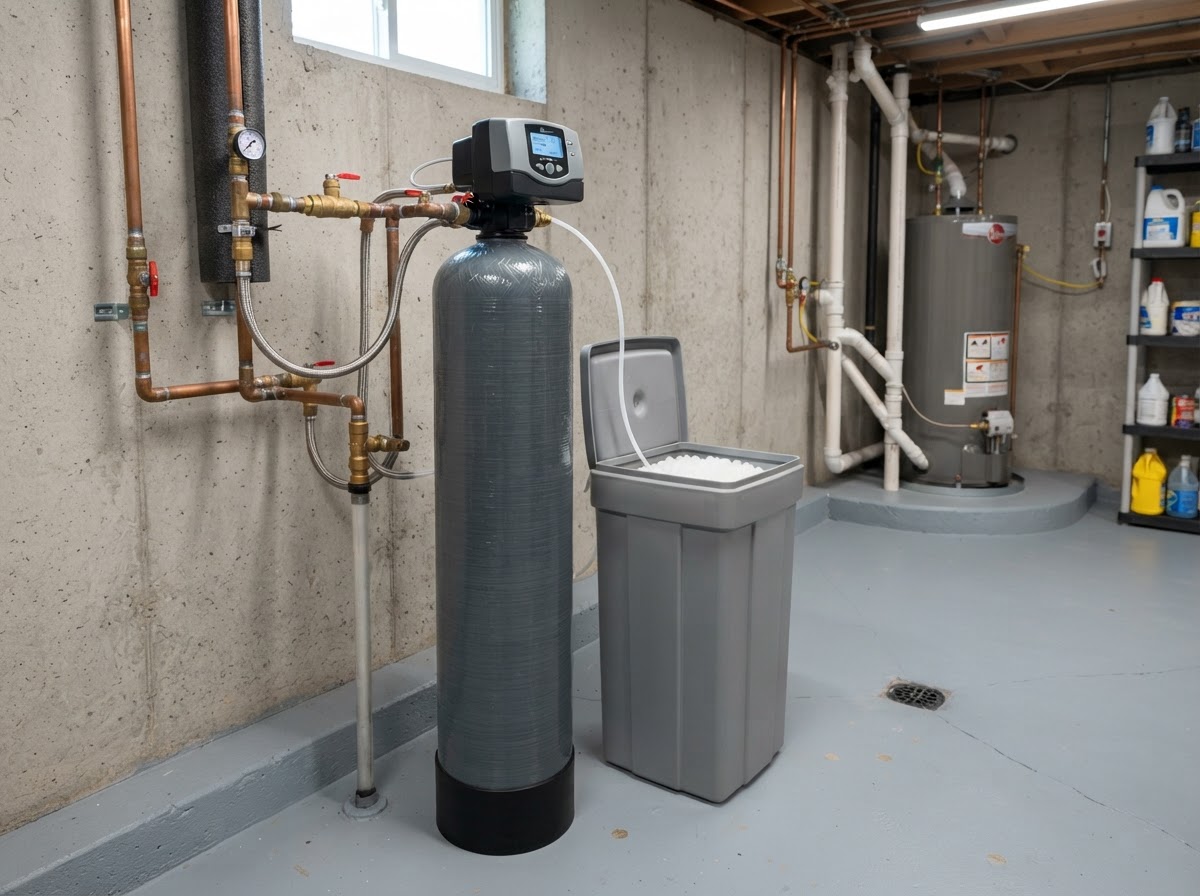
Common Water Softener Problems
A water softener can stop working correctly for several reasons. Some issues involve routine maintenance, while others may need professional inspection or component repair.
Water Softener Not Regenerating
A water softener uses a regeneration cycle to restore its resin's ability to exchange hardness minerals. If regeneration doesn't occur properly, the system may no longer reduce hardness as intended. Possible causes include settings, power, controls, valves, or brine-system problems.
Brine Tank Full of Water
Some water in a brine tank may be normal, depending on the system design and point in the regeneration cycle. An unexpectedly high water level or overflowing tank may indicate a drain, brine-draw, float, injector, or control problem.
Salt Bridge or Salt Mushing
Salt can harden into a crust above the water or form a compact mass near the bottom of the tank. These conditions can interfere with proper brine production.
Water Softener Leaking
Leaks may involve fittings, hoses, seals, housings, or control-valve components. A leak should be assessed promptly to prevent additional property damage.
Low Water Pressure
A restricted softener, control-valve issue, or another plumbing condition can affect water flow. Low pressure does not automatically mean the softener is responsible.
Water Still Feels Hard
Possible causes include improper settings, incomplete regeneration, resin problems, bypass-valve position, or a different water condition. Water testing helps establish whether hardness is actually elevated.
How Does a Water Softener Work?
A conventional salt-based water softener uses ion-exchange resin to reduce calcium and magnesium hardness minerals.
As water passes through the resin, the system exchanges hardness minerals for other ions, typically sodium or potassium depending on the regeneration chemistry. Over time, the resin's working capacity is used. During regeneration, a brine solution restores the resin's exchange capacity so the system can continue softening.
Normal Operation
Incoming Water
Water carrying dissolved calcium and magnesium enters the resin tank.
Resin Tank
As water passes through the ion-exchange resin, hardness minerals are exchanged for sodium or potassium ions, depending on the system and regenerant.
Softened Water
Treated water with reduced hardness minerals travels on to the home's fixtures.
Regeneration Cycle
Salt + Water
A brine solution is produced in the brine tank from salt and water.
Resin Regeneration
The brine solution restores the resin's exchange capacity so the system can continue softening.
Wastewater Discharge
The removed minerals and rinse water are discharged to an approved drain.
Normal operation depends on the control valve, regeneration settings, brine system, available salt, and equipment condition. A softener is not a universal drinking water purification system and does not automatically remove lead, PFAS, bacteria, or all contaminants.
Why Isn't My Water Softener Regenerating?
Regeneration failure may involve several possible causes:
- Incorrect time or regeneration settings.
- Loss of electrical power for units requiring it.
- A malfunctioning control board.
- A stuck or failing control valve.
- Injector or brine-line restrictions.
- A problem drawing brine.
- Other model-specific components.
Some systems regenerate on a timer, while others track water use. Equipment behavior varies by brand and model. Repeated failure to regenerate may require evaluation of the control system and brine pathway. Safe preliminary observations may include checking the model's displayed error message, power status, and published maintenance instructions. Do not disassemble energized controls or pressurized plumbing.
Salt Bridges, Salt Mushing, and Brine Tank Problems
A salt bridge is a hardened layer of salt that forms above the brine water, leaving an air space underneath. Salt mushing involves compacted salt material that can interfere with normal brine formation. Other issues may include:
- Incorrect salt type.
- Moisture conditions.
- Blocked brine lines.
- Float problems.
- Injector restrictions.
- Unexpected standing water.
A tank that looks full of salt does not necessarily mean the softener is producing proper brine. The proper salt level and normal water level vary by model. Homeowners should consult the manufacturer's instructions. Do not pour chemicals into the brine tank or use sharp tools inside it.
Water Softener Leaks and Valve Problems
A water softener leak may come from a connection, seal, valve assembly, tank fitting, or nearby plumbing. Control valves regulate water flow through the resin and coordinate regeneration functions. When a valve or fitting fails, the system may leak, regenerate incorrectly, or cause other performance problems.
Warning signs may include:
- Water around the equipment.
- Drips from fittings.
- Unusual water flow to a drain line.
- Repeated error codes.
- Failure to change operating modes.
- Unexpected water pressure changes.
If water is actively leaking, protect the property and contact an appropriate plumbing or water treatment professional. Do not open pressurized housings or disassemble control valves.
Can a Water Softener Cause Low Water Pressure?
A water softener introduces equipment into the home's plumbing system. Under some conditions, a restriction or malfunction can contribute to reduced water flow. Possible causes include:
- Control-valve restrictions.
- Equipment not sized for household demand.
- Internal media problems.
- Plumbing connection issues.
- Other restrictions elsewhere in the home.
Not every low-pressure problem is caused by the water softener. A professional may need to evaluate the system and nearby plumbing. Do not bypass required treatment equipment or alter pressurized plumbing without appropriate guidance.
What Do Water Softener Error Codes Mean?
Modern water softeners may show error messages when their controls detect an operating problem. The meaning of an error code varies by manufacturer and model. Some codes may relate to:
- Control-valve positioning.
- Motor operation.
- Electrical controls.
- Regeneration cycles.
- Sensor or meter readings.
A code displayed on one brand's unit may mean something entirely different on another brand. Document the equipment's brand, model, and exact displayed code when calling about repair. We are not an authorized warranty servicer for any specific manufacturer.
Should You Repair or Replace Your Water Softener?
Repair May Make Sense When:
- The issue involves a replaceable component.
- Compatible replacement parts are available.
- The equipment still serves a verified treatment need.
- The repair is economically reasonable.
- The rest of the system remains suitable for the household.
Replacement May Make Sense When:
- Repairs are recurring.
- Major components have failed.
- Manufacturer support or parts are unavailable.
- Repair costs approach replacement costs.
- The system is improperly sized or no longer meets its treatment goal.
The Home May Not Need a Softener
Homes receiving naturally soft MWRA municipal water may not require conventional softening. For an older or inherited system, water hardness testing can help determine whether continuing to operate, repair, or replace the equipment makes sense. Do not recommend replacement automatically.
Do Waltham Homes Need Water Softeners?
Waltham receives municipal drinking water through MWRA. MWRA reports its water is naturally soft, with typical hardness around 16 mg/L as calcium carbonate, approximately 1 grain per gallon. For most municipal customers, conventional water softening is unnecessary.
This does not mean that no Waltham homeowner has an existing softener. Some properties may have inherited equipment, older installations, alternative sources, or particular treatment arrangements. If an existing unit is malfunctioning, it may be worth confirming the water's actual hardness and identifying whether the softener serves a useful purpose before spending money on repairs.
We do not describe Waltham as a severe hard-water market.
Can Water Testing Help Diagnose a Softener Problem?
When a homeowner says a softener is no longer working, testing the water for hardness may help confirm whether the unit is failing to reduce calcium and magnesium. Comparing incoming and treated water hardness may help evaluate performance when conducted appropriately. The results can help determine whether a system adjustment, repair, replacement, or no softening equipment is necessary.
Testing should match the treatment objective. A TDS meter is not an appropriate substitute for a hardness measurement. TDS represents a broad measure of dissolved substances, while hardness specifically concerns calcium and magnesium.
We do not recommend comprehensive contaminant testing for every routine repair, and we do not perform laboratory analysis ourselves.
How to Help Prevent Water Softener Problems
Useful practices depend on the equipment, settings, household water use, and water hardness.
Following manufacturer instructions.
Using the specified salt type.
Checking salt levels as recommended for the model.
Watching for error messages.
Checking accessible equipment for leaks.
Keeping the area around the unit accessible.
Maintaining an appropriate regeneration schedule.
Recording maintenance or service history.
Addressing unusual water use or performance changes.
Scheduling inspection when repeated problems occur.
There is no single universal salt fill level or regeneration frequency. Actual requirements depend on equipment type, settings, household water use, and water hardness.
Information That Helps With Water Softener Repair
Customers can often make a repair inquiry more useful by knowing:
- Equipment brand and model.
- Approximate age, if known.
- Any displayed error code.
- Whether the unit is leaking.
- Whether the brine tank has an unusual water level.
- Whether regeneration appears to occur.
- Whether water hardness has actually been tested.
- Whether the property uses municipal water or a different source.
A homeowner does not need to diagnose the unit before calling. The purpose is to help the independent provider understand the problem and discuss the next step.
Water Softener Repair Options in Waltham and Nearby Towns
Waltham Water Filtration Co. helps customers explore service options in Waltham and nearby communities. Across Waltham — from the South Side, Cedarwood, and Warrendale to Lakeview, Piety Corner, the Highlands, and Banks Square — homes share a common MWRA municipal supply, though individual properties vary in plumbing age and existing equipment.
We also help homeowners in nearby towns including Newton, Watertown, Belmont, Lexington, Weston, and Lincoln.
Those communities do not all have the same municipal water supply. Lincoln operates its own municipal system. We do not claim all towns have hard water or that every home needs softener repair, and we do not maintain staffed offices in each community.
How Much Does Water Softener Repair Cost?
Repair pricing depends on several factors:
- Equipment brand and model.
- Type of failure.
- Availability of replacement components.
- Whether the problem involves controls, valves, seals, or brine equipment.
- Plumbing work required.
- Age and condition of the system.
- Local provider pricing.
- Whether replacement is more practical.
Minor maintenance and major control-valve repairs may have different costs. Confirming whether the property still needs softening can help avoid unnecessary repair spending. We do not invent fixed repair prices or promise free diagnosis or waived service fees.
Getting Help With Water Softener Repair
- 1
Call About Your Equipment
Describe the problem, model if known, and whether the system is leaking or displaying an error.
- 2
Discuss Repair Options
Waltham Water Filtration Co. helps connect homeowners with independent water treatment providers who can discuss appropriate maintenance, repair, or replacement options.
- 3
Review Next Steps and Pricing
Discuss the likely scope of service, equipment needs, and available pricing before proceeding.
Related Water Treatment Services
Water Softener Installation
For existing equipment replacement or a verified softening requirement.
Learn moreWater Softener Repair FAQs
Straight answers to the questions Waltham homeowners ask most about softener problems, salt, and repair decisions.
Why is my water softener not working?+
A softener may stop working because of a regeneration problem, incorrect settings, a salt or brine issue, a control-valve malfunction, or another equipment fault. The cause depends on the model and symptoms. Confirming actual water hardness can also help determine whether the system is failing to soften water.
Why isn't my water softener regenerating?+
Possible causes include electrical problems, incorrect control settings, a stuck valve, blocked brine components, or a control-system fault. Regeneration systems vary by manufacturer. If basic model-specific checks do not identify the issue, an appropriate provider may need to inspect the unit.
Why is my water softener brine tank full of water?+
The normal amount of water in a brine tank depends on its design and the stage of regeneration. Excessive standing water or overflow may indicate a blocked drain, brine-line problem, injector restriction, or control issue. Follow the manufacturer's instructions and seek service when appropriate.
What is a salt bridge in a water softener?+
A salt bridge is a hardened layer of salt that forms above the brine water. It can prevent salt from dissolving properly, interfering with regeneration. Salt bridges may develop because of moisture, salt conditions, or other factors. The correct response depends on the specific model and manufacturer guidance.
Can a water softener cause low water pressure?+
Yes, some softener restrictions or malfunctions can contribute to reduced water flow. However, low water pressure can also result from other plumbing issues. An inspection may be necessary to determine whether the softener is responsible.
Can a leaking water softener be repaired?+
Some leaks may involve replaceable seals, fittings, hoses, or valve components. Other leaks may involve more serious equipment damage. Whether repair is appropriate depends on the condition of the unit, available parts, and repair cost. Active leaks should be addressed promptly to prevent property damage.
Is it better to repair or replace an old water softener?+
Repair may be appropriate if the problem is limited and compatible parts are available. Replacement may make sense when major components have failed or repair costs are high. In Waltham, where municipal MWRA water is naturally soft, testing may also help determine whether a conventional softener is needed at all.
Does Waltham have hard water?+
Waltham receives naturally soft MWRA municipal water. MWRA reports typical hardness around 16 mg/L, or approximately 1 grain per gallon. Most homes on that supply do not need conventional softening. Properties with a different water source or special circumstances may have different needs.
How often does a water softener need maintenance?+
Maintenance requirements depend on the model, regeneration system, water conditions, and usage. Homeowners should follow the manufacturer's recommended schedule for salt management, cleaning, inspections, and service. There is no single maintenance interval that applies to every system.
How much does water softener repair cost in Waltham, MA?+
Costs depend on the equipment, problem, replacement parts, and service required. A minor adjustment or component replacement may differ significantly from a major valve repair. Call (781) 226-3613 to discuss the equipment issue and available service and pricing options.
Need Help With a Water Softener That Isn't Working?
A water softener that leaks, fails to regenerate, or keeps showing error codes may need maintenance, repair, or replacement. The right next step depends on the equipment, the actual water conditions, and whether the system is still needed. Waltham Water Filtration Co. helps homeowners explore water softener service options and connect with independent providers serving Waltham and nearby Massachusetts communities. Call to discuss the problem and available next steps.