Whole-House Water Filtration in Waltham, MA
A whole-house water filtration system treats incoming water before it travels to the faucets, showers, and appliances throughout your home. Depending on the system, filtration may help address sediment, unpleasant taste, certain odors, and other specific water quality concerns.
Waltham Water Filtration Co. helps homeowners explore whole-house filtration options and connect with water treatment providers serving Waltham, Massachusetts.
Whether you're considering a new system or replacing an existing one, call to discuss your home's needs and available installation options.
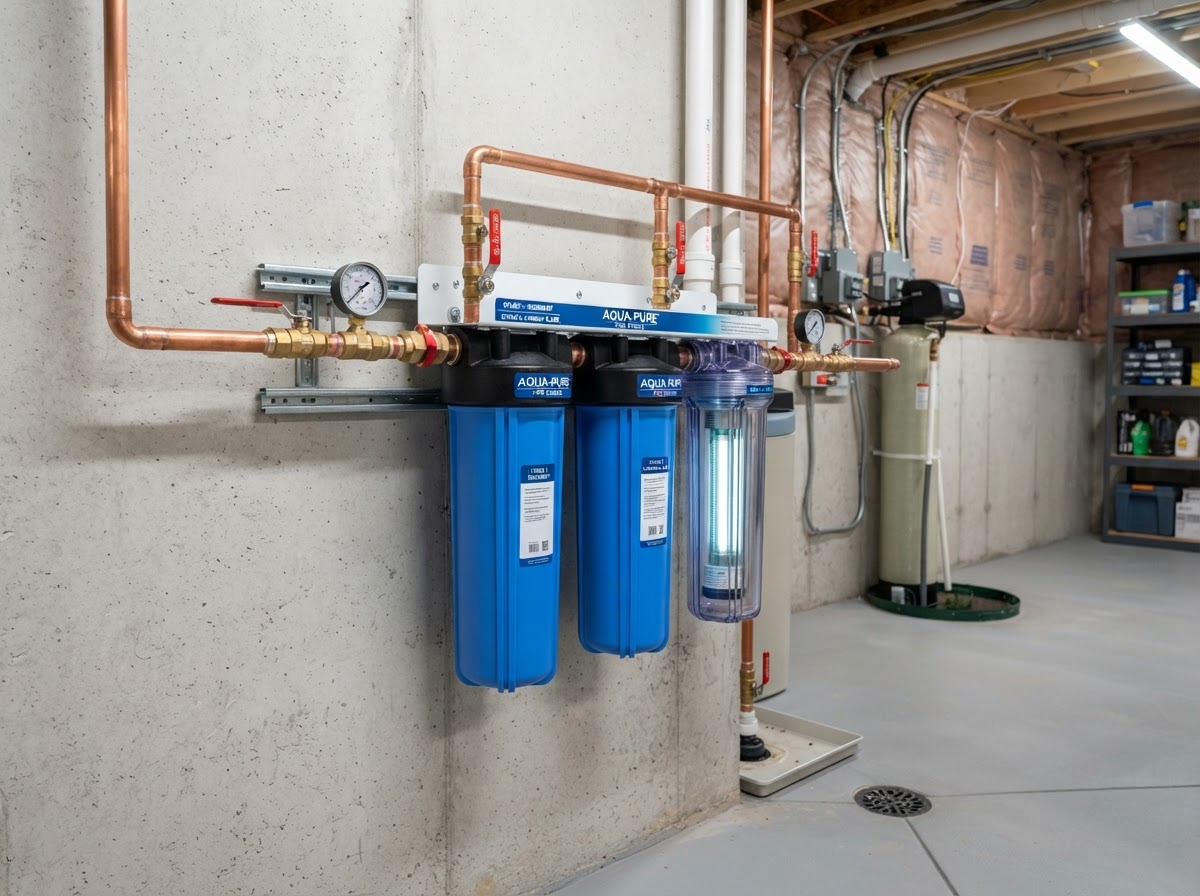
How Does a Whole-House Water Filtration System Work?
A whole-house system treats water at one central point so every tap in the home receives filtered water. Here's how the process works in plain terms.
A whole-house water filtration system is typically installed where the main water line enters the home. This is also known as point-of-entry filtration.
As water passes through the system, one or more filter stages target specific particles or substances. Depending on the system design, filtered water then travels to the home's fixtures and appliances.
Unlike an under-sink filter that serves a single faucet, a whole-house system can treat incoming water for multiple fixtures. However, not every whole-house system removes the same substances. Filter technology, equipment sizing, flow rate, and verified contaminant-reduction claims determine what the system can accomplish.
Whole-house filtration does not automatically mean every substance has been removed from the water. The system only reduces what its specific filter stages are designed and verified to address.
Whole-House Water Filtration Options
Different filter technologies address different concerns. The right choice depends on what is in your water and what you want to change.
Sediment Water Filters
Sediment filters are designed to capture particles such as sand, dirt, rust flakes, and other suspended material, depending on the filter's micron rating and design. They may be useful when a homeowner notices visible particles or when an existing filter clogs unusually quickly.
Determining where sediment originates matters — it may be related to plumbing, distribution-system disturbances, or other factors. Not every sediment concern requires a whole-house filtration system.
Learn about sediment filtrationActivated Carbon Filtration
Activated carbon filtration uses adsorptive media to reduce certain substances. Depending on the certified equipment, carbon filters may improve taste and odor and reduce specified chemicals.
Standard carbon filtration and catalytic carbon filtration can have different treatment capabilities. Waltham receives MWRA water, which uses monochloramine for residual disinfection. Equipment intended to reduce chloramine must have suitable, verified performance claims — not every standard carbon filter effectively treats chloramine.
Multi-Stage Whole-House Systems
Some systems combine a sediment prefilter with one or more additional treatment stages. A multi-stage system may make sense when water testing or an assessment identifies more than one treatment goal.
Adding filtration stages does not automatically make a system better. The design needs to match the water conditions and required household flow.
Specialty Filtration Systems
Some homeowners may need treatment targeting a specific contaminant. Examples include products designed for certain metals or chemicals, provided the equipment has verified reduction claims for those substances.
Not all whole-house systems remove PFAS, lead, bacteria, dissolved minerals, or every contaminant. Select equipment based on testing, manufacturer specifications, and relevant certifications.
Signs You May Want to Look Into Whole-House Water Filtration
These are the concerns Waltham homeowners most often describe when they call. None of them on its own tells you which system you need — but together they help point to the right next step.
Water Filters That Clog Too Quickly
A filter that fills with sediment sooner than expected can be frustrating. The cause may involve suspended particles, an undersized filter, household usage, or plumbing conditions. Understanding the source matters before purchasing a larger system — a bigger filter treats the symptom, not the cause.
Visible Sediment or Particles
Particles in water may come from several sources. The appearance of particles alone does not identify the substance or its origin. An inspection and, when appropriate, testing can help determine where the material is coming from before treatment is selected.
Unpleasant Water Taste or Odor
Some filtration technologies target particular taste and odor concerns. Identifying the cause — whether disinfectant residual, plumbing, or something else — leads to better treatment choices than guessing.
Questions About Household Plumbing
Older plumbing materials, fixtures, and interior water lines may affect water at the tap. Whole-house filtration is not a universal solution for plumbing-related concerns; the right next step depends on what is actually contributing to what you notice.
Maintaining Existing Equipment
Systems with overdue filter replacement, reduced flow, or unclear maintenance histories may need service rather than replacement. A provider can inspect the equipment and recommend whether to repair, re-filter, or upgrade.
What Waltham Homeowners Should Know About Their Water
Waltham receives municipal drinking water through the Massachusetts Water Resources Authority (MWRA). MWRA water comes from protected reservoir sources and is regularly monitored and tested.
MWRA describes its drinking water as naturally soft, with typical hardness around 1 grain per gallon. This means most homeowners using the municipal supply do not automatically need a water softener.
Waltham homeowners may still consider filtration for specific treatment goals, taste preferences, or concerns involving their household plumbing or existing filtration equipment. The city's water quality data describes the public water system, while individual plumbing and fixtures may introduce additional factors — so a homeowner should identify the concern before choosing equipment.
Neighborhoods across Waltham — from the South Side and Warrendale to Lakeview, Piety Corner, Cedarwood, and the Highlands — share a common MWRA municipal supply, though individual homes vary in plumbing age, fixtures, and existing equipment.
This page does not suggest the city has unsafe drinking water or a widespread contamination problem.
Whole-House Filtration or Under-Sink Water Filter?
Neither is automatically the best choice for every property. The right solution depends on the treatment goal, water conditions, budget, and household needs.
Whole-house filtration
- Installed at the home's main water supply.
- Treats incoming water for multiple fixtures.
- Can address water treatment goals affecting the entire home.
- Requires sizing for household water demand.
- Usually involves more extensive installation.
Under-sink filtration
- Installed near a specific faucet.
- Focuses on drinking and cooking water.
- May be a practical option when treatment is only needed at one location.
- Includes several technologies, including carbon filtration and reverse osmosis.
What Goes Into Whole-House Water Filter Installation?
A whole-house system connects to your home's main water line, so installation involves more than screwing on a filter. Here's what a provider considers.
System Location
Whole-house equipment is generally installed near the incoming main water line. The installation location needs adequate access for servicing and filter changes.
Household Water Flow
Systems must be sized for expected water demand. An undersized filter can restrict flow, especially when multiple fixtures run at once. Flow rate and pressure simply describe how much water moves through the system and how forcefully — a correctly sized filter keeps both healthy.
Plumbing Connections
Installation may require plumbing modifications, fittings, isolation valves, or a bypass arrangement. Work requirements vary by property and equipment.
Equipment Selection
Filter media, system capacity, treatment claims, and maintenance requirements need to match the treatment goals identified for your home.
Maintenance Access
Homeowners should consider how easily filters can be inspected and replaced. A system that is hard to reach tends to be serviced less often.
Testing When Appropriate
When the goal is to address a specific water quality concern, appropriate testing may help guide equipment selection so the system matches what is actually in your water.
This page describes the general process for context. Modifying a main water line is not a DIY project — a provider handles the plumbing, sizing, and connections.
How Much Does Whole-House Water Filtration Cost?
The total cost of a whole-house water filtration system depends on several factors. Different homes and treatment objectives can require very different equipment, so there is no single average price that applies to every Waltham home.
An installation quote should clarify what equipment is included, the expected maintenance schedule, and any additional plumbing work — so you can compare options on equal terms rather than on price alone.
Whole-House Water Filter Replacement & Maintenance
Filtration systems need maintenance to keep working as intended. Filter life depends on equipment specifications and actual water conditions, so there is no universal replacement interval that applies to every system.
Following the manufacturer's schedule — and watching for the signs below — helps keep flow and filtration performance where they should be.
How to Choose a Whole-House Filtration System
A simple framework helps you avoid paying for treatment you don't need — and make sure the system you choose actually addresses your water.
- 1Identify what you want to change about your water.
- 2Review available municipal water quality information.
- 3Consider property-specific water testing where appropriate.
- 4Choose equipment with verified claims for the target substances.
- 5Make sure the system is correctly sized.
- 6Understand installation requirements.
- 7Compare equipment, installation, and maintenance costs.
Understanding certifications
NSF/ANSI 42 relates to aesthetic claims such as particular taste, odor, or particulate reductions.
NSF/ANSI 53 relates to specific health-related contaminant reduction claims.
Certification to one standard does not mean a system removes every contaminant. The product's exact certified reduction claims matter — check them against what you actually want to reduce.
Getting Help With Whole-House Water Filtration
- 1
Call About Your Water
Explain what you're experiencing and whether you're interested in installing, replacing, or maintaining a whole-house system.
- 2
Discuss Your Options
We help connect homeowners with water treatment providers who can discuss possible equipment and service options.
- 3
Review Installation and Pricing
Discuss system recommendations, installation requirements, equipment costs, and maintenance before proceeding.
Related Water Filtration Services
Sediment Water Filtration
Reduce sediment, particles, and discoloration before they reach your fixtures.
Learn moreWater Filter Replacement
Keep your system working with the correct replacement cartridges and a maintenance schedule.
Learn moreReverse Osmosis Systems
Multi-stage under-sink filtration for high-quality drinking water at the kitchen sink.
Learn moreWater Filtration Installation
Professional installation for whole-house, under-sink, and reverse osmosis systems.
Learn moreWhole-House Water Filtration FAQs
Straight answers to the questions Waltham homeowners ask most about whole-house filtration.
Is a whole-house water filtration system worth it?+
It depends on what you want to address. Whole-house filtration may be worth considering when the treatment goal applies to several fixtures throughout the home. If your main concern is drinking water at the kitchen sink, an under-sink filter may be more practical. Comparing treatment goals and ongoing maintenance costs can help you decide. Call to discuss your options.
Does whole-house filtration remove every contaminant?+
No. Different filtration systems use different treatment methods, and no single standard whole-house filter removes everything. Some systems target sediment or taste and odor concerns, while others are designed for specific contaminants. Check the equipment's verified performance claims before choosing a system. Call to discuss filtration options.
Will a whole-house water filter reduce water pressure?+
Any filtration system introduces some resistance to water flow. A correctly sized and maintained system is designed to accommodate the household's expected demand, but an undersized or clogged filter can contribute to reduced pressure. Equipment selection and installation conditions matter. Call with questions about sizing a whole-house system.
How often should whole-house water filters be changed?+
Replacement intervals depend on the filter type, system capacity, manufacturer recommendations, household usage, and water conditions. Some systems use cartridges while others have different maintenance requirements. Following the recommended maintenance schedule is important. Call to discuss filter replacement.
Do Waltham homes need whole-house filtration?+
Not every Waltham home needs a whole-house water filter. MWRA monitors the municipal water supply, and treatment needs depend on each homeowner's goals and property conditions. Some homeowners want additional filtration for taste or specific concerns, while others may not need an additional system. Call to explore your options.
Can whole-house filtration help with sediment?+
Certain whole-house sediment filters are designed to capture suspended particles. The appropriate filter depends on particle size, water flow, and where the sediment is coming from. If particles are appearing suddenly or filters clog unusually quickly, investigating the cause is important. Call about sediment filtration options.
What is the difference between a water softener and a whole-house water filter?+
A water softener reduces hardness minerals such as calcium and magnesium. A whole-house water filter may be designed to reduce particles, taste and odor compounds, or specific contaminants depending on its technology. These systems serve different purposes. Waltham's MWRA water is generally soft, so softening should not automatically be assumed necessary. Call to discuss treatment options.
How much does whole-house water filtration installation cost in Waltham?+
Cost depends on the filtration technology, equipment capacity, installation requirements, and any plumbing modifications. Ongoing filter replacement and maintenance should also be included when comparing systems. A provider can discuss project details and available pricing. Call (781) 226-3613 to request information about whole-house filtration installation.
Explore Whole-House Water Filtration for Your Waltham Home
Considering a whole-house water filtration system? Whether you're interested in reducing sediment, improving water taste, replacing an older filter, or learning about treatment options, Waltham Water Filtration Co. can help you take the next step. Call to discuss your water concerns and connect with a provider serving the Waltham area.