Water Softener Installation in Waltham, MA
Considering a water softener for your home? Water softeners are designed to reduce hardness minerals such as calcium and magnesium. They may be useful for homes with verified hard-water conditions or existing softening systems that need replacement.
Waltham Water Filtration Co. helps homeowners explore water softener installation, replacement, and water treatment options and connect with independent providers serving Waltham, Massachusetts.
Because Waltham's municipal water is naturally soft, we recommend understanding your home's water conditions before deciding whether a softener is necessary. Call to discuss your situation and available options.
- Water Softener Installation
- Existing System Replacement
- Water Hardness Testing
- Water Conditioning Options
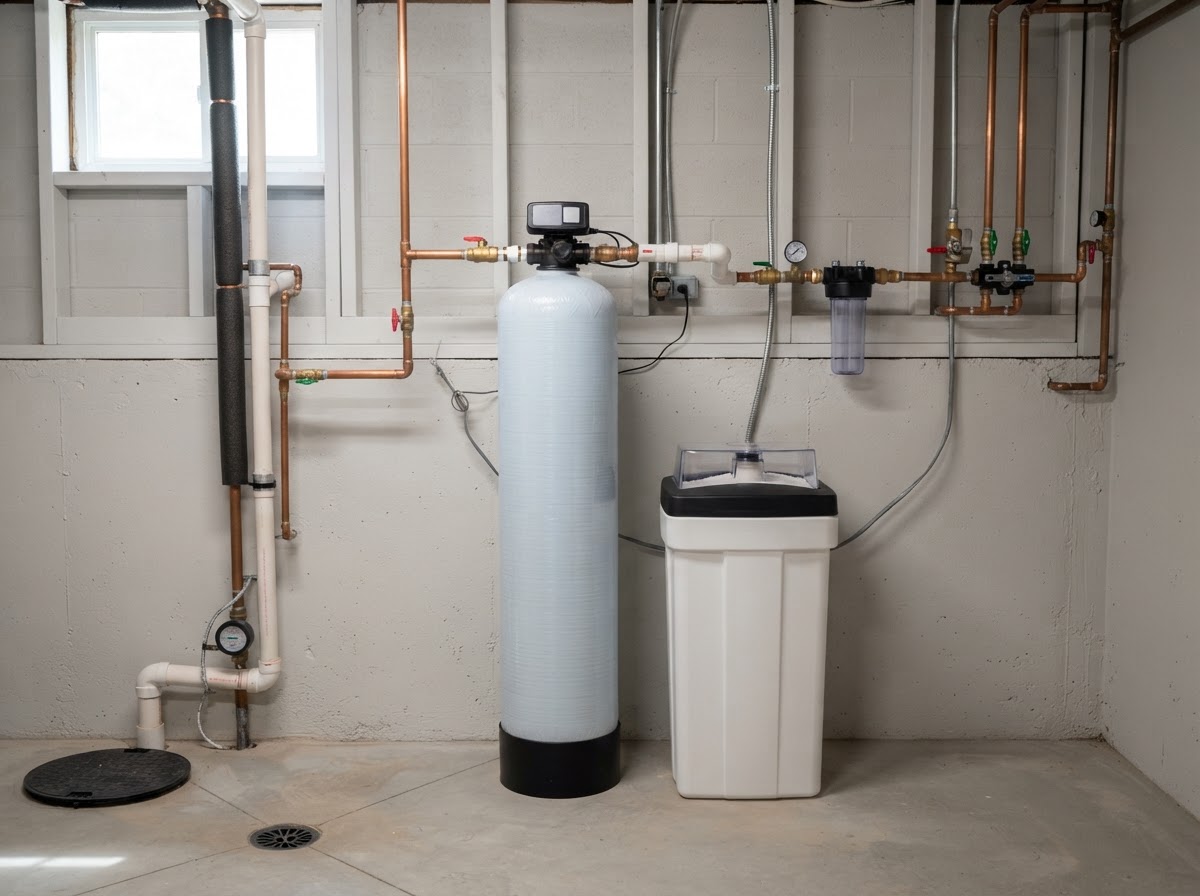
How Does a Water Softener Work?
Water hardness is primarily caused by dissolved calcium and magnesium. A conventional salt-based softener uses an ion-exchange resin to reduce those minerals.
As hard water passes through the resin, calcium and magnesium ions are exchanged for sodium or potassium ions, depending on the system and regenerant. Over time, the resin's capacity is depleted, and the system periodically regenerates the resin using a brine solution so it can continue reducing hardness.
Water softeners do not work the same way as carbon filters, sediment filters, or reverse osmosis membranes. Conventional softeners are primarily designed to address hardness rather than provide general contaminant removal.
Incoming Hard Water
Hard water carries dissolved calcium and magnesium into the home's plumbing.
Ion Exchange Resin
As water passes through the resin, calcium and magnesium ions are exchanged for sodium or potassium ions, depending on the system and regenerant.
Softened Water
Treated water with reduced hardness minerals travels on to the home's fixtures and appliances.
Incoming Hard Water → Ion Exchange Resin → Softened Water
A separate regeneration cycle uses the brine tank to refresh the resin and discharges the removed minerals to an approved drain.
Over time the resin's capacity is depleted. The system periodically regenerates the resin using a brine solution from the brine tank, then rinses the discharged minerals to a drain so the resin can continue reducing hardness.
Common Signs of Hard Water in a Home
These are the signs homeowners most often notice first. None of them, on their own, proves a home has hard water.
Mineral Scale
White or chalky mineral deposits on faucets, showerheads, or fixtures may be associated with hard water.
Soap and Detergent Performance
Hard water can interfere with soap lathering and cleaning performance.
Spots on Dishes or Glassware
Mineral deposits may contribute to spotting, although other causes are possible.
Scale in Water-Using Equipment
Hardness minerals can contribute to scale buildup in appliances and water heaters under certain conditions.
Repeated Cleaning Problems
Some homeowners notice mineral residue on shower surfaces or fixtures that returns after cleaning.
These symptoms alone do not prove a home has hard water. Some residue, spots, and cleaning problems can have other causes. Because Waltham's MWRA municipal water is generally soft, homeowners should not assume they need a softener without checking their actual water conditions.
Types of Water Softeners and Conditioning Systems
From salt-based ion exchange to salt-free conditioners and combination systems, the right equipment depends on measured hardness, water demand, and household goals.
Salt-Based Ion Exchange Water Softeners
These systems use resin and salt-based regeneration to reduce calcium and magnesium. They are commonly used where measurable hardness makes softening appropriate.
Conventional ion-exchange softeners address hardness rather than providing general contaminant removal.
Metered Water Softeners
Metered softeners typically initiate regeneration based on measured water usage or estimated remaining treatment capacity. They may reduce unnecessary regeneration compared with poorly configured time-based systems.
Actual efficiency depends on the equipment and its settings.
Timer-Based Water Softeners
Timer-based systems regenerate on a programmed schedule rather than in response to measured usage.
Demand-based regeneration and scheduled regeneration work differently. The right approach depends on the household and equipment.
Dual-Tank Water Softeners
Some systems use two resin tanks to provide softening capacity through alternating service and regeneration cycles.
These may be relevant for certain higher-demand applications. Not every residential property needs a dual-tank system.
Salt-Free Water Conditioners
Salt-free conditioning systems use technologies that differ from ion exchange. Some are marketed to help manage scale formation.
They generally do not remove calcium and magnesium hardness ions in the same manner as conventional ion-exchange softeners. Salt-free conditioning is not equivalent to actual ion-exchange water softening. Performance claims should be evaluated for the specific product.
Combination Water Treatment Systems
Some equipment combines softening with other treatment stages.
Filtration and softening serve different purposes. Combination systems should be selected based on actual water conditions and treatment goals.
Does Waltham, Massachusetts Need Water Softeners?
Waltham receives its municipal drinking water through the Massachusetts Water Resources Authority (MWRA). MWRA reports that its drinking water is naturally soft. According to MWRA, typical hardness is approximately 16 milligrams per liter, or about 1 grain per gallon — considerably softer than water commonly described as hard.
As a result, many Waltham households connected to the municipal water system do not need an additional water softener. However, individual properties can have different circumstances. Some homes may have:
- A private or alternative water supply.
- An existing softener that requires repair or replacement.
- Specific treatment equipment requiring evaluation.
- Unusual property-specific water conditions.
- Questions about mineral deposits or water quality that warrant investigation.
Testing can help determine whether hardness reduction is actually necessary. Across Waltham — from the South Side and Cedarwood to Warrendale, Lakeview, Piety Corner, and the Highlands — homes share a common MWRA supply, though individual properties vary in plumbing age and existing equipment. This page does not claim those neighborhoods have different hardness levels.
Waltham Water Filtration Co. helps homeowners connect with providers who can discuss hardness testing, existing equipment, and suitable treatment options.
Water Softener vs. Water Filtration: What's the Difference?
Softening and filtration address different water concerns. Matching the equipment to the actual goal matters more than assuming every home needs both.
Water Softeners
- Primarily address calcium and magnesium hardness.
- Conventional systems use ion exchange.
- May require salt or potassium chloride for regeneration.
- Typically treat water entering multiple household fixtures.
- Require periodic maintenance and regeneration.
- Do not automatically remove a broad range of drinking water contaminants.
Water Filtration Systems
- Use technologies selected for particular treatment goals.
- May target sediment, taste, odor, or specified contaminants.
- Include activated carbon, membrane filtration, and other methods.
- May treat water at one faucet or throughout the home.
- Have different maintenance requirements depending on equipment.
Many households need neither a water softener nor additional filtration unless there is a defined treatment goal. A softener should not automatically be recommended to someone whose main concern is chlorine taste, PFAS, lead, or sediment.
Why Test Water Hardness Before Installing a Softener?
Hardness testing measures calcium and magnesium, usually reported as milligrams per liter as calcium carbonate or grains per gallon. Because Waltham's municipal water is generally soft, testing can help homeowners avoid purchasing equipment they do not need.
Testing may be especially valuable when:
- The home uses a private well.
- The water supply is unclear.
- An existing softener is not performing as expected.
- A homeowner is experiencing unexplained mineral residue.
- Water hardness is suspected but has not been measured.
TDS measurements do not provide the same information as a specific hardness test. Not all dissolved solids are hardness minerals. One grain per gallon is approximately 17.1 milligrams per liter as calcium carbonate.
What Is Involved in Water Softener Installation?
A typical installation follows a general sequence. The actual steps and requirements vary by property and equipment.
- 1
Evaluate Hardness and Water Demand
Determine whether softening is needed and estimate household water use.
- 2
Choose the Equipment
Select an appropriately sized system based on measured hardness, water usage, regeneration efficiency, and installation requirements.
- 3
Choose an Installation Location
Water softeners are often installed near the main incoming water supply in a basement, utility room, or other suitable location.
- 4
Review Plumbing and Drainage
Traditional ion-exchange systems typically need water supply connections and an approved method of handling regeneration discharge. Some systems also require electrical power.
- 5
Install and Configure
Appropriate professionals should follow equipment instructions and applicable Massachusetts plumbing requirements.
- 6
Test Operation
After installation, the equipment should be checked for leaks, appropriate operation, hardness reduction, and correct regeneration settings where applicable.
Installation requirements vary by property and equipment. This page describes the general process for context and does not provide instructions for homeowners to modify household plumbing themselves.
What to Consider Before Installing a Water Softener
Available Space
Water softeners may require a resin tank, brine tank, and adequate maintenance access.
Incoming Water Pressure
Equipment must operate within manufacturer pressure specifications.
Household Water Demand
Proper sizing depends on expected usage and measured hardness.
Drainage Requirements
Regeneration discharge must be handled in accordance with applicable plumbing and wastewater requirements.
Salt Storage
Conventional systems require room for the regenerant and safe access for refilling.
Electrical Requirements
Some systems require electricity for electronic controls and regeneration.
Bypass Valve
A bypass arrangement can help support servicing and maintenance when specified by the system design.
Licensing and Permits
Massachusetts regulates plumbing work under 248 CMR. The installation provider should determine applicable licensing, permit, and inspection requirements for the specific project.
Not all installations have identical permit requirements. The provider should confirm what applies to a specific project rather than assuming every installation is the same.
How Much Does Water Softener Installation Cost in Waltham?
Installation pricing depends on several factors. An installation replacing existing equipment may differ from a new installation requiring additional plumbing. A useful quote should identify the equipment, labor, installation requirements, and ongoing maintenance expenses.
This page does not invent Waltham-specific price ranges or advertise free installation or free testing. A provider can discuss your project and available pricing.
Water Softener Maintenance & Replacement
Conventional ion-exchange softeners require ongoing maintenance to keep reducing hardness as intended.
Salt or Regenerant Levels
The brine tank must contain the correct type and quantity of regenerant according to manufacturer instructions.
Regeneration Settings
System controls should match water conditions and household usage.
Resin Performance
Over time, resin may lose effectiveness or require service due to fouling, damage, or other equipment conditions.
Brine Tank Inspection
The tank may need cleaning or maintenance according to manufacturer instructions.
Hardness Checks
Testing can help determine whether an existing system is effectively reducing hardness.
Leaks and Equipment Problems
Leaks, control issues, or failure to soften properly may indicate that service is needed.
Some equipment may be repairable rather than requiring complete replacement. There is no universal maintenance interval that applies to every softener — follow the manufacturer's instructions for the specific equipment.
Repairing or Replacing an Existing Water Softener
Common customer concerns that prompt a repair-or-replace decision include:
- System no longer softening as expected.
- Control valve problems.
- Regeneration issues.
- Leaks.
- Salt bridging or brine problems.
- Aging equipment.
- High maintenance requirements.
A provider may evaluate the condition, parts availability, equipment performance, and cost of repair before recommending replacement. Because Waltham's water is naturally soft, homeowners with an existing system should also confirm whether continued softening is necessary for their particular water source before replacing the unit.
What Does NSF/ANSI 44 Mean for Water Softeners?
NSF/ANSI 44 is a standard for residential cation-exchange water softeners. It addresses requirements involving:
- Material safety.
- Structural integrity.
- Hardness reduction performance.
- Softening capacity.
- Pressure drop.
- Regeneration-related performance.
- Product information.
Certification to NSF/ANSI 44 does not mean every softener treats all possible contaminants. Customers should review the exact equipment's certification and documented claims.
This page does not claim that Waltham Water Filtration Co. or its independent providers hold certifications without verification.
Getting Help With Water Softener Installation
- 1
Call About Your Water or Existing Equipment
Tell us whether you're considering a new softener, replacing an older system, or investigating a hardness concern.
- 2
Discuss Available Options
We help connect homeowners with independent water treatment providers who can discuss hardness testing, equipment, and installation requirements.
- 3
Review Recommendations and Pricing
Discuss whether softening is appropriate, the installation scope, and available pricing before deciding how to proceed.
Related Water Treatment Services
Water Testing
Find out what is actually in your water — including hardness — before choosing equipment.
Learn moreWater Softener Repair
Diagnose and service softeners that have stopped reducing hardness effectively.
Learn moreWater Filtration Installation
Professional installation for whole-house and point-of-use filtration systems.
Learn moreUnder-Sink Water Filtration
Compact point-of-use filtration for a dedicated drinking water tap.
Learn moreReverse Osmosis Systems
Multi-stage under-sink drinking water treatment for specific reduction goals.
Learn moreWater Softener Installation FAQs
Straight answers to the questions Waltham homeowners ask most about softening, hardness, and installation.
Does Waltham, MA have hard water?+
Waltham receives municipal water from MWRA, which reports that its water is naturally soft, typically around 1 grain per gallon. Many homes connected to the municipal supply do not need additional softening. Properties with different water sources or specific conditions may benefit from hardness testing. Call to discuss your water treatment options.
Do I need a water softener in Waltham?+
Not necessarily. If you receive MWRA municipal water, you may not need one because the supply is generally soft. A water softener is most useful when measured hardness makes treatment appropriate. Testing can help avoid unnecessary equipment purchases. Call with questions about your water or an existing softener.
What's the difference between a water softener and a water filter?+
A conventional softener uses ion exchange to reduce calcium and magnesium hardness. A water filter uses media or other technology to address particular particles, taste and odor concerns, or specified contaminants. These systems serve different purposes. Call to discuss which type of treatment may fit your needs.
Are salt-free water conditioners the same as water softeners?+
No. Conventional ion-exchange softeners remove hardness minerals from water by exchanging ions. Salt-free conditioners generally use different processes and may be designed to influence scale formation rather than remove calcium and magnesium. Performance varies by product. Call to compare available treatment options.
How long does water softener installation take?+
Installation time depends on the equipment, existing plumbing, available space, drainage requirements, and whether the project involves replacing an existing unit or installing a new system. A provider can review the requirements and discuss the expected scope. Call to ask about installation options.
How often does a water softener need maintenance?+
Maintenance requirements depend on the equipment and its operating conditions. Conventional softeners generally require regenerant replenishment, periodic checks, and manufacturer-recommended servicing. An existing unit may also need inspection if it stops softening effectively. Call to discuss maintenance or repair.
Can I replace my existing water softener?+
An older or malfunctioning softener may be repaired or replaced depending on its condition and the available parts. Before replacing it, it's worth confirming the home's current water hardness and whether softening is still necessary. Call to discuss replacement options and pricing.
How much does water softener installation cost in Waltham?+
Pricing depends on system size, equipment type, plumbing configuration, drainage requirements, and installation complexity. Ongoing salt, water use, and maintenance costs should also be considered. Call (781) 226-3613 to discuss your project and available pricing.
Have Questions About Water Softeners in Waltham?
Whether you're replacing an existing softener, dealing with a suspected hardness problem, or comparing water treatment options, Waltham Water Filtration Co. can help you explore the next steps. Because Waltham's municipal water is naturally soft, understanding your home's actual conditions is especially important before installing new equipment. Call to discuss available testing, installation, repair, and replacement options with a provider serving Waltham.