Reverse Osmosis Systems in Waltham, MA
Looking for a reverse osmosis water filtration system for your Waltham home? Reverse osmosis systems are commonly installed under the kitchen sink to provide treated drinking and cooking water. These systems use a specialized membrane and additional filtration stages to reduce dissolved substances and specific contaminants, depending on the equipment.
Waltham Water Filtration Co. helps homeowners explore reverse osmosis systems and connect with water treatment providers serving Waltham, Massachusetts.
Whether you're considering a new installation, replacing an older unit, or comparing filtration options, call to discuss your needs.
- Under-Sink RO Installation
- Drinking Water Filtration
- RO System Replacement
- Filter & Membrane Maintenance
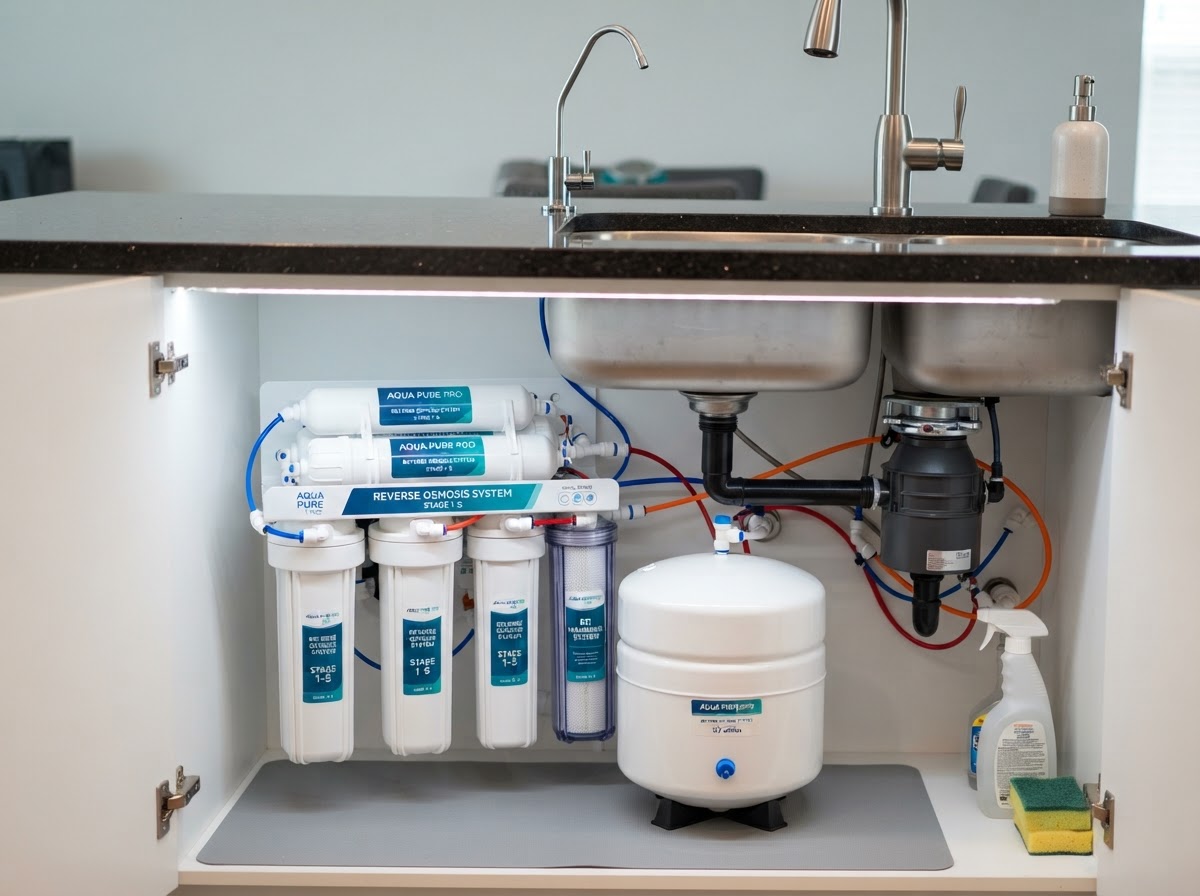
How Does a Reverse Osmosis Water Filter Work?
Reverse osmosis uses pressure to move water through a specialized membrane. Residential systems combine several stages to protect the membrane and polish the finished water.
Reverse osmosis is a water treatment process that uses pressure to move water through a semipermeable membrane. The membrane separates part of the incoming water into a treated-water stream and a reject-water stream. Residential systems generally combine multiple treatment stages.
Specific system designs vary by manufacturer, but most under-sink RO systems follow the same basic sequence:
Sediment Prefilter
Helps capture particles that could otherwise affect downstream components.
Carbon Prefilter
Depending on the media, helps reduce certain disinfectants or other substances that could affect membrane performance.
Reverse Osmosis Membrane
Reduces dissolved solids and specific substances according to the system's design and verified performance claims.
Post-Filter
May provide additional taste and odor treatment after the membrane.
Storage Tank or Tankless Delivery
Some systems store treated water in a pressure tank. Others use a tankless configuration that produces treated water on demand.
Incoming Water → Prefilters → RO Membrane → Post-Filter → Drinking Water Faucet
A separate reject-water line carries away the concentrated stream the membrane leaves behind. The process is straightforward in concept, but the details vary by system.
Reverse Osmosis System Options for Your Home
From tank-based to tankless and multi-stage to remineralizing, RO systems come in several configurations. The right one depends on your space, water, and goals.
Under-Sink Reverse Osmosis Systems
Under-sink RO systems are designed to supply treated drinking and cooking water at a particular location. They are commonly installed beneath a kitchen sink and typically connect to a dedicated drinking water faucet.
These systems are different from whole-house treatment systems, which treat water for every fixture rather than a single tap.
Tank-Based Reverse Osmosis Systems
Some residential RO systems use a storage tank to hold treated water until it is needed. A storage tank can help provide water quickly, although tank size and replenishment rates affect available capacity.
When several glasses are filled in a row, a small tank may empty before it refills — so tank size should match how your household actually uses the faucet.
Tankless Reverse Osmosis Systems
Tankless RO systems generally use pumps and membranes designed to provide treated water without a conventional large storage tank. They may offer a different footprint, flow performance, and electrical requirements.
Tankless does not automatically mean better. Water demand, installation space, equipment specifications, and maintenance should guide the decision.
Multi-Stage RO Systems
Some RO systems use additional prefilters, post-filters, or conditioning stages. The number of stages alone does not establish filtration performance.
Equipment should be compared using its documented performance and certified contaminant-reduction claims, not a stage count.
Reverse Osmosis With Remineralization
Some systems include a post-treatment stage that adds selected minerals to treated water, often to adjust taste or water characteristics.
Remineralization is optional and should be evaluated based on customer preferences and equipment specifications. It is not medically necessary.
What Can Reverse Osmosis Remove From Drinking Water?
RO technology can reduce a range of dissolved substances, but actual performance varies by system. Potential treatment targets may include:
- Total dissolved solids
- Certain dissolved metals
- Some inorganic contaminants
- Specific chemicals for which a system has verified reduction claims
- Other substances identified in the product's performance data sheet
This list is not a promise that any single RO unit removes all of these substances. Actual reduction depends on the membrane, prefilters, and the product's verified performance data.
Do Waltham Homes Need Reverse Osmosis Filtration?
Waltham receives its municipal drinking water through the Massachusetts Water Resources Authority (MWRA). MWRA monitors water quality and publishes regular testing reports. Its drinking water is naturally soft, with hardness typically around one grain per gallon.
Water softness and reverse osmosis serve different purposes. RO is not simply a solution for hard water. Some Waltham homeowners consider point-of-use filtration because they prefer the taste of additional filtered water, want to address a specific treatment goal, or have questions about their household plumbing.
However, municipal water quality reports do not establish that every Waltham home requires reverse osmosis. The appropriate choice depends on the homeowner's goals, actual water conditions, and the performance of the filtration equipment.
For some households, a simpler under-sink carbon filter may address the desired taste or odor concern without requiring a reverse osmosis membrane. For other treatment goals, reverse osmosis may be worth considering.
Neighborhoods across Waltham — from the South Side and Warrendale to Cedarwood, Lakeview, Piety Corner, and the Highlands — share a common MWRA supply, though individual homes vary in plumbing age and existing equipment. This page does not claim those neighborhoods have different contamination levels.
Waltham Water Filtration Co. helps homeowners connect with providers who can discuss drinking water treatment options and installation requirements.
Reverse Osmosis vs. Under-Sink Carbon Filtration
Neither option is automatically right for everyone. The choice depends on the substances to be reduced, system performance, installation requirements, and long-term costs.
Reverse Osmosis
- Uses a semipermeable membrane.
- Designed to reduce total dissolved solids and specific substances.
- Generally includes several treatment stages.
- Produces a reject-water stream.
- May use a storage tank or tankless configuration.
- Requires periodic filter and membrane maintenance.
Under-Sink Carbon Filtration
- Uses carbon or other media depending on the system.
- Commonly selected for specific taste, odor, or contaminant-reduction goals.
- Does not necessarily reduce total dissolved solids.
- Typically does not generate RO reject water.
- Often has a simpler equipment layout.
- Requires regular filter replacement.
What Is Involved in Reverse Osmosis Installation?
An under-sink RO system touches your water supply, your sink, and your drain. Here's what a provider considers during installation.
Installation Location
RO systems are commonly installed beneath the kitchen sink or in another suitable location serving a dedicated drinking water faucet. Space and accessibility are important.
Water Supply Connection
A typical system connects to a cold-water supply using components appropriate for the plumbing and equipment.
Drinking Water Faucet
Many RO systems use a separate drinking water faucet. Installation requirements may depend on the countertop, sink, and chosen equipment.
Drain Connection
RO systems produce reject water that must be handled through an appropriate drain arrangement. Correct installation and applicable plumbing requirements matter.
Storage or Tankless Configuration
The selected system affects space, electricity needs, water delivery, and maintenance. Tankless systems may require an outlet; tank-based systems need room for the tank.
System Commissioning
Providers should follow manufacturer instructions for flushing, sanitizing where required, checking for leaks, and verifying proper operation.
Installation details vary by system. This page describes the general process for context and does not provide instructions for homeowners to modify plumbing themselves.
Do Reverse Osmosis Systems Waste Water?
Yes, reverse osmosis systems produce a separate reject-water stream as part of the treatment process. The amount depends on equipment design, incoming water conditions, operating pressure, and system efficiency. Traditional systems may use considerably more water than efficient modern systems.
EPA WaterSense-labeled point-of-use RO systems are designed to meet water-efficiency and performance requirements. Homeowners whose only concern is drinking water taste may want to compare RO with simpler filtration technologies before deciding.
How Much Does Reverse Osmosis Installation Cost?
Installation cost depends on several factors. Shoppers should compare the initial installation cost and the total ongoing cost of ownership — including filters and membrane replacement — rather than looking at equipment price alone.
This page does not advertise specific Waltham installation prices, free installation, financing, or discounts. A provider can discuss your project and available pricing.
Reverse Osmosis Filter Replacement & Maintenance
RO systems require regular maintenance. There is no one universal replacement schedule — follow the manufacturer's instructions for your exact equipment.
Sediment Prefilters
These help protect downstream system components and may require periodic replacement.
Carbon Prefilters and Post-Filters
These must be replaced according to the manufacturer's schedule and actual system conditions.
RO Membranes
Membrane life varies with the system, incoming water conditions, use, and maintenance.
Storage Tanks
Systems with tanks may require inspection, servicing, or sanitizing according to manufacturer instructions.
Leaks and Connections
Water connections should be checked if a problem is suspected.
Reduced Water Production
A slow or underperforming system may need filter replacement, inspection, or other service.
Is a Reverse Osmosis System Right for Your Home?
Choose equipment based on the actual goal rather than assuming the most complex system is best.
RO may be worth exploring when…
- You want treatment specifically for drinking and cooking water.
- You have a defined water treatment goal.
- You want to compare membrane filtration with other technologies.
- You understand the equipment's space and maintenance requirements.
- You are comfortable with its water-use characteristics.
A different approach may make more sense when…
- —Your main goal is a relatively simple taste or odor improvement.
- —You need filtration for multiple fixtures throughout the home.
- —The desired treatment can be achieved by a less complex technology.
- —Testing or evaluation has not yet established the need for RO.
Getting Help With Reverse Osmosis Installation
- 1
Call About Your Drinking Water
Tell us what you're looking for, whether it's a new RO system, a replacement, or help with existing equipment.
- 2
Discuss Available Systems
We help connect you with independent water treatment providers who can discuss system types and service options.
- 3
Review Installation & Pricing
Discuss equipment, installation details, maintenance costs, and available pricing before deciding how to proceed.
Other Water Filtration Services
Water Filtration Installation
Professional installation for RO, under-sink, and whole-house systems.
Learn moreReverse Osmosis FAQs
Straight answers to the questions Waltham homeowners ask most about RO systems.
Is reverse osmosis water better than regular tap water?+
Reverse osmosis provides additional treatment that can reduce dissolved solids and certain contaminants, depending on the equipment. That does not mean municipal tap water is automatically unsafe or that everyone needs RO. The value depends on your treatment goals, water conditions, and the system's verified performance. Call to discuss drinking water filtration options.
Does reverse osmosis remove lead and PFAS?+
Some reverse osmosis systems have certified performance claims for reducing lead, certain PFAS compounds, or other specific contaminants. Not every RO system carries the same claims. Check the exact product's certification and performance data, especially when addressing a particular contaminant. Call to discuss filtration options.
How much water does a reverse osmosis system waste?+
RO systems generate reject water during treatment. The amount varies significantly between models. Efficient systems, including EPA WaterSense-labeled models, can reduce water use compared with less efficient equipment. Ask about the system's efficiency when comparing options. Call for information about RO systems.
How often do reverse osmosis filters need to be replaced?+
Replacement depends on the filter type, membrane, manufacturer specifications, water quality, and system usage. Prefilters, post-filters, and membranes may have different maintenance schedules. Follow the instructions for the exact equipment rather than assuming all systems use the same schedule. Call for RO maintenance options.
Can reverse osmosis be installed under my kitchen sink?+
Many residential RO systems are designed for under-sink installation. The available space, plumbing configuration, drain access, faucet installation, and equipment dimensions determine what will fit. Some compact or tankless configurations may suit different layouts. Call to discuss installation requirements.
Does reverse osmosis remove healthy minerals from water?+
RO membranes reduce many dissolved substances, which can include naturally occurring minerals such as calcium and magnesium. Some systems include optional remineralization stages for taste preferences. Whether that feature is useful depends on the homeowner's goals and equipment. Call to compare available RO options.
Is a tankless reverse osmosis system better?+
Tankless systems can offer different space and water-delivery characteristics, but they are not automatically better for every home. Consider installation requirements, electricity needs, flow rate, water efficiency, cost, and maintenance. Compare actual equipment specifications rather than relying on tankless marketing alone. Call to discuss system choices.
How much does reverse osmosis installation cost in Waltham?+
Costs vary based on equipment, installation complexity, plumbing requirements, and whether the system uses a storage tank or tankless configuration. Ongoing filters and membrane replacement should also be considered. Call (781) 226-3613 to discuss your project and available pricing.
Explore Reverse Osmosis Water Filtration for Your Waltham Home
Thinking about installing a reverse osmosis system? Whether you're comparing under-sink drinking water filters, replacing an older RO unit, or trying to understand your filtration options, Waltham Water Filtration Co. helps you connect with water treatment providers serving the area. Call to discuss your needs, available systems, and installation options.